What are cross-strung harps?

Cross-strung harps are chromatic harps that have two courses of strings that cross in the middle of the playing space.  One set is the standard string configuration of a single course harp, which is the white keys/notes of a piano.  The second set of strings is the notes of the black keys of a piano, thus making all of the notes in five octaves available to the harper without having to use sharping levers.  Since the strings cross in the middle, all of the strings are playable from either side of the harp.
When will my harp or kantele be finished?

Dr. Blessley will keep you informed on the progress of your harp as he builds it (by hand).  There are  many variables that affect the time necessary to complete your harp or kantele.  In general, it takes several months to make a harp, and kanteles are quicker 

What are cross-strung harps?

Cross-strung harps are chromatic harps that have two courses of strings that cross in the middle of the playing space.  One set is the standard string configuration of a single course harp, which is the white keys/notes of a piano.  The second set of strings is the notes of the black keys of a piano, thus making all of the notes in five octaves available to the harper without having to use sharping levers.  Since the strings cross in the middle, all of the strings are playable from either side of the harp.
Frequently Asked Questions

What are your harps and kanteles made from?

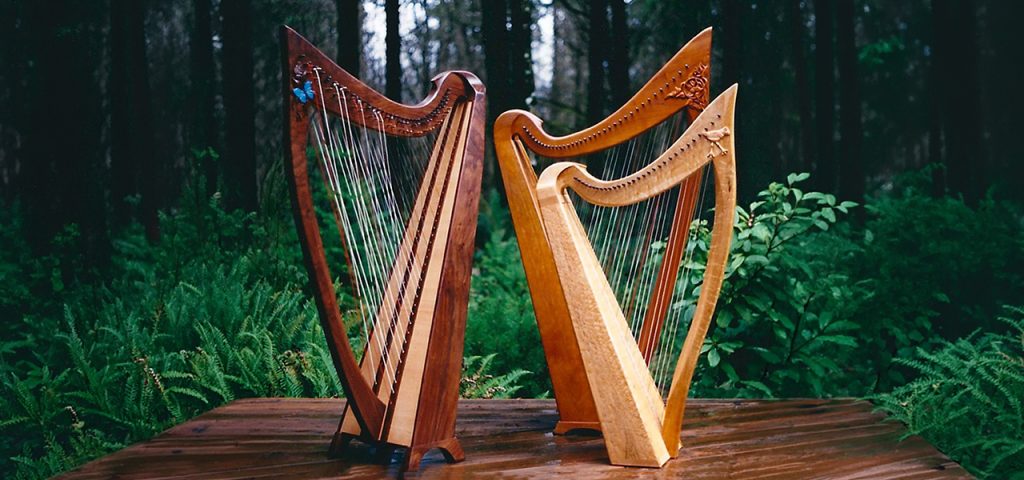
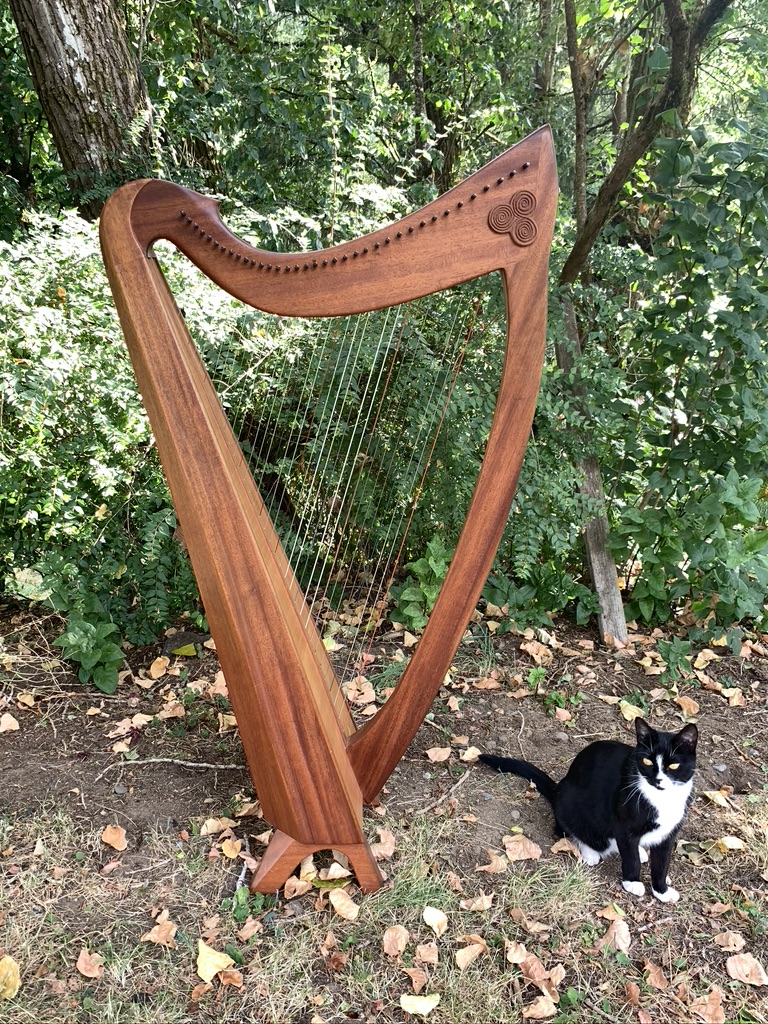
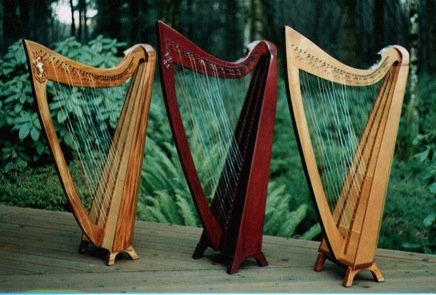
Blessley Instruments’ harps are made from the finest hardwoods available.  The harps are generally made from just one slab of wood, and the back and sides of the soundbox are “bookmatched” for beautiful and unique grain patterns.  We use “Steinway Grade” Sitka Spruce for the soundboards.  The Finnish kanteles are made of Alder wood, as well as other North American hardwoods that are used in our harps.  We currently make instruments with:  cherry, black walnut, maple, and mahogany; and we have also used bubinga and purple heart wood in the past.   Extra lightweight models have also been made on request from Aircraft grade plywood, which is strong and lightweight.  Our source provides this plywood after it has been x-rayed to check that it does not have voids, and it is insured by Lloyd’s of London.  

How much do harps cost?

The cost of the harps depends upon the model chosen, the type of sharping levers installed, and the type of wood that is used.  Extra cost options include a custom wood carving or decorative painting on the harp.  

When will my harp or kantele be finished?

Dr. Blessley will keep you informed on the progress of your harp as he builds it (by hand).  There are  many variables that affect the time necessary to complete your harp or kantele.  In general, it takes several months to make a harp, and kanteles are quicker 

What are cross-strung harps?

Cross-strung harps are chromatic harps that have two courses of strings that cross in the middle of the playing space.  One set is the standard string configuration of a single course harp, which is the white keys/notes of a piano.  The second set of strings is the notes of the black keys of a piano, thus making all of the notes in five octaves available to the harper without having to use sharping levers.  Since the strings cross in the middle, all of the strings are playable from either side of the harp.
Frequently Asked Questions

What are your harps and kanteles made from?

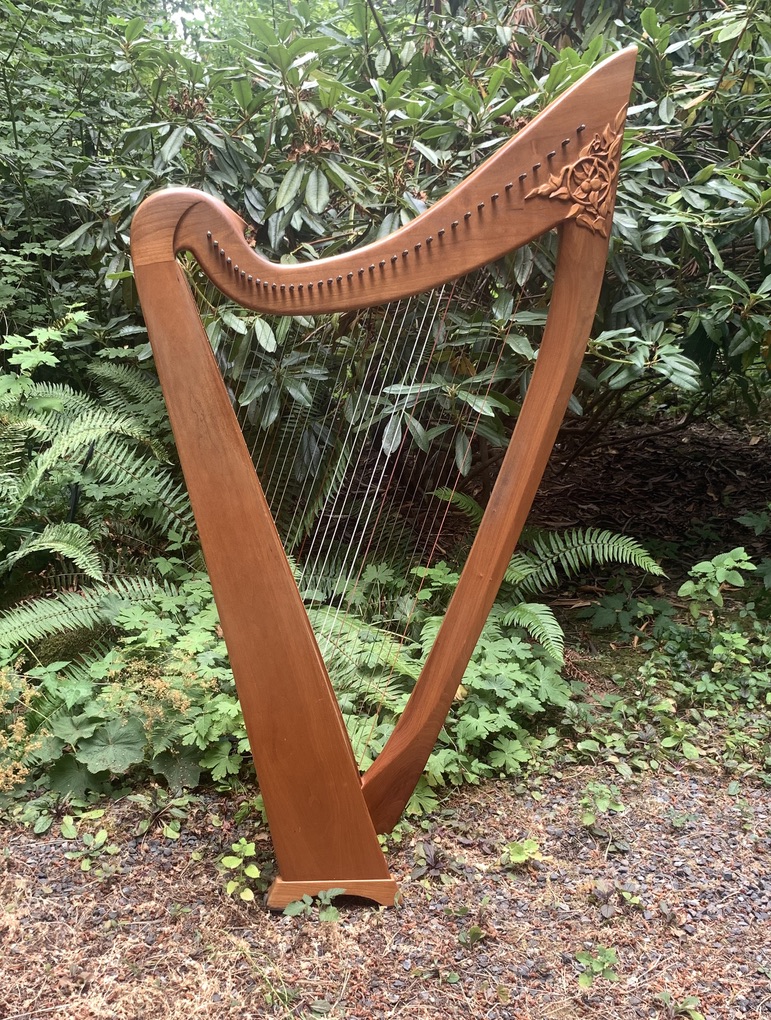
Blessley Instruments’ harps are made from the finest hardwoods available.  The harps are generally made from just one slab of wood, and the back and sides of the soundbox are “bookmatched” for beautiful and unique grain patterns.  We use “Steinway Grade” Sitka Spruce for the soundboards.  The Finnish kanteles are made of Alder wood, as well as other North American hardwoods that are used in our harps.  We currently make instruments with:  cherry, black walnut, maple, and mahogany; and we have also used bubinga and purple heart wood in the past.   Extra lightweight models have also been made on request from Aircraft grade plywood, which is strong and lightweight.  Our source provides this plywood after it has been x-rayed to check that it does not have voids, and it is insured by Lloyd’s of London.  

How much do harps cost?

The cost of the harps depends upon the model chosen, the type of sharping levers installed, and the type of wood that is used.  Extra cost options include a custom wood carving or decorative painting on the harp.  

When will my harp or kantele be finished?

Dr. Blessley will keep you informed on the progress of your harp as he builds it (by hand).  There are  many variables that affect the time necessary to complete your harp or kantele.  In general, it takes several months to make a harp, and kanteles are quicker 

What are cross-strung harps?

Cross-strung harps are chromatic harps that have two courses of strings that cross in the middle of the playing space.  One set is the standard string configuration of a single course harp, which is the white keys/notes of a piano.  The second set of strings is the notes of the black keys of a piano, thus making all of the notes in five octaves available to the harper without having to use sharping levers.  Since the strings cross in the middle, all of the strings are playable from either side of the harp.

What We Make

Blessley Instruments is best known for their custom Celtic and Cross-strung Harps, built in Vancouver, WA.   For the Blessleys, instrument building has evolved from making only square backed harps to making stave backed harps, the specialty of custom designed cross-strung harps of five octaves, and their newest creations,  Finnish kanteles – the Finnish National Instrument – a member of the zither family, that sounds much like a wire strung harp. 

About Us

Various harpers, both famous and non-professional, have said that Blessley harps have “excellent voice throughout the full range.” We encourage you to listen and compare.  Sound sample links are located on the harp models pages. 

Blessley Instruments produces only a few of their custom crafted harps per year, the average being 1-3 instruments. Most are made-to-order for individual harpers.  Kanteles can be made more quickly due to their size.

They’d love to talk to you about your dream harp when you’re ready for a Blessley Instrument. 

Contact Mark (360) 910-1112 or Valerie Blessley (360) 600-8477 or email drblessley@gmail.com or valerie.blessley@gmail.com

Mailing Address:  10013 NE Hazel Dell Ave. #148, Vancouver, WA, USA 98685 

Frequently Asked Questions

What are your harps and kanteles made from?

Blessley Instruments’ harps are made from the finest hardwoods available.  The harps are generally made from just one slab of wood, and the back and sides of the soundbox are “bookmatched” for beautiful and unique grain patterns.  We use “Steinway Grade” Sitka Spruce for the soundboards.  The Finnish kanteles are made of Alder wood, as well as other North American hardwoods that are used in our harps.  We currently make instruments with:  cherry, black walnut, maple, and mahogany; and we have also used bubinga and purple heart wood in the past.   Extra lightweight models have also been made on request from Aircraft grade plywood, which is strong and lightweight.  Our source provides this plywood after it has been x-rayed to check that it does not have voids, and it is insured by Lloyd’s of London.  

How much do harps cost?

The cost of the harps depends upon the model chosen, the type of sharping levers installed, and the type of wood that is used.  Extra cost options include a custom wood carving or decorative painting on the harp.  

When will my harp or kantele be finished?

Dr. Blessley will keep you informed on the progress of your harp as he builds it (by hand).  There are  many variables that affect the time necessary to complete your harp or kantele.  In general, it takes several months to make a harp, and kanteles are quicker 

What are cross-strung harps?

Cross-strung harps are chromatic harps that have two courses of strings that cross in the middle of the playing space.  One set is the standard string configuration of a single course harp, which is the white keys/notes of a piano.  The second set of strings is the notes of the black keys of a piano, thus making all of the notes in five octaves available to the harper without having to use sharping levers.  Since the strings cross in the middle, all of the strings are playable from either side of the harp.